The third party list is either manually completed or automatically populated through the import of a third party or transaction file.
This list is available for information purposes. It can be modified and deleted.
Users with access to the third party list can be granted management rights on third parties.
Specification of the minimum right level to access Third Party Management function:
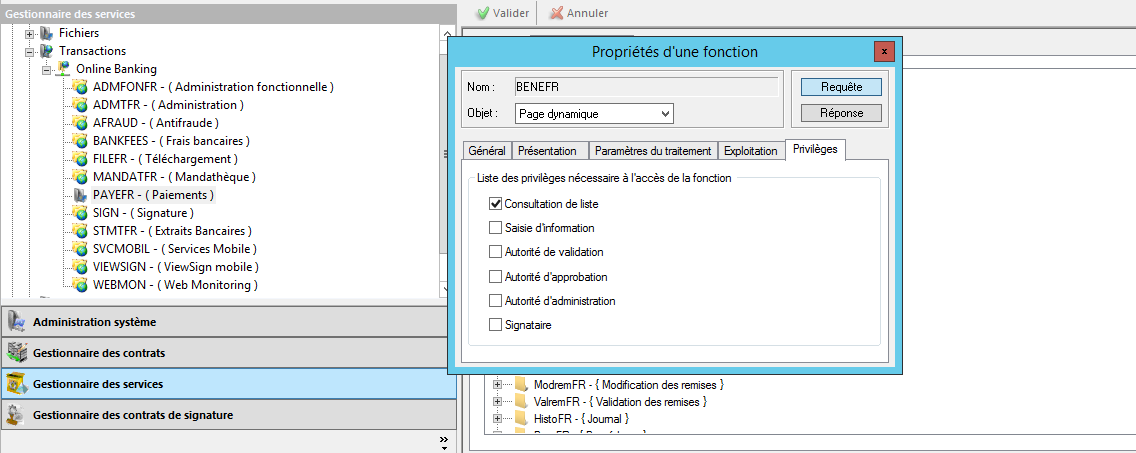
Specification of the access right to Third Party Management:
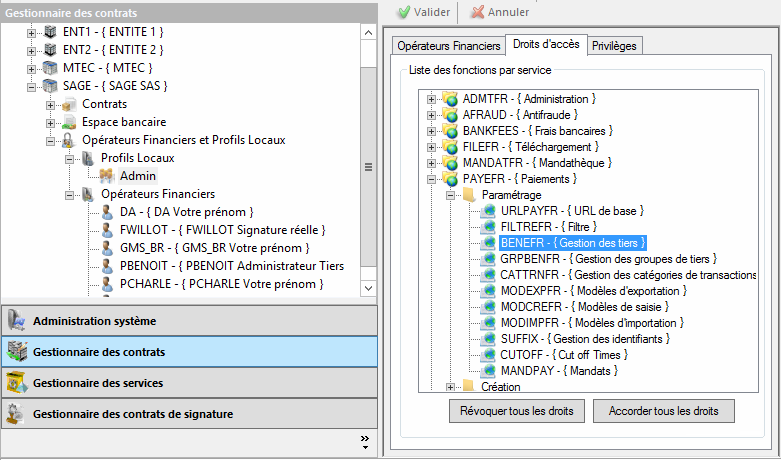
Specification of the access restriction to Third Party Management:
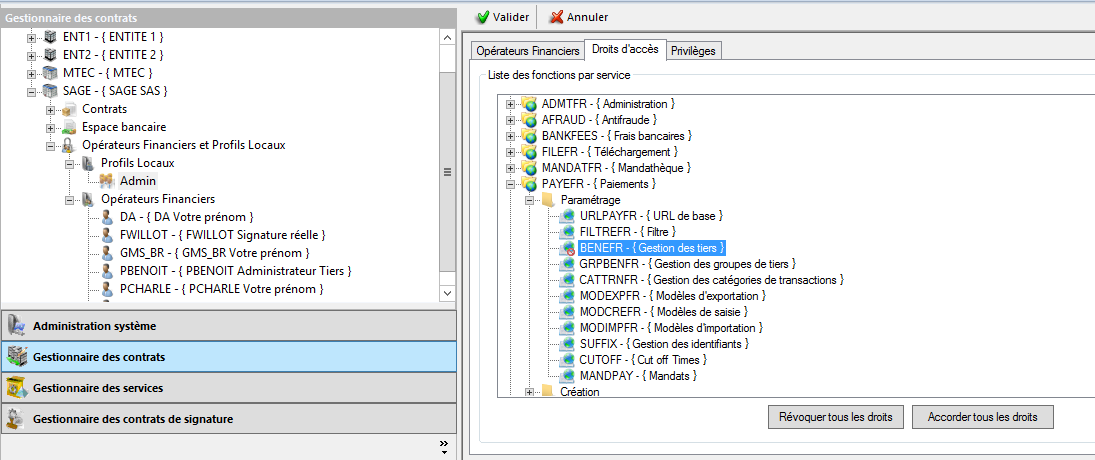
Third party list provided to users with more than access rights:
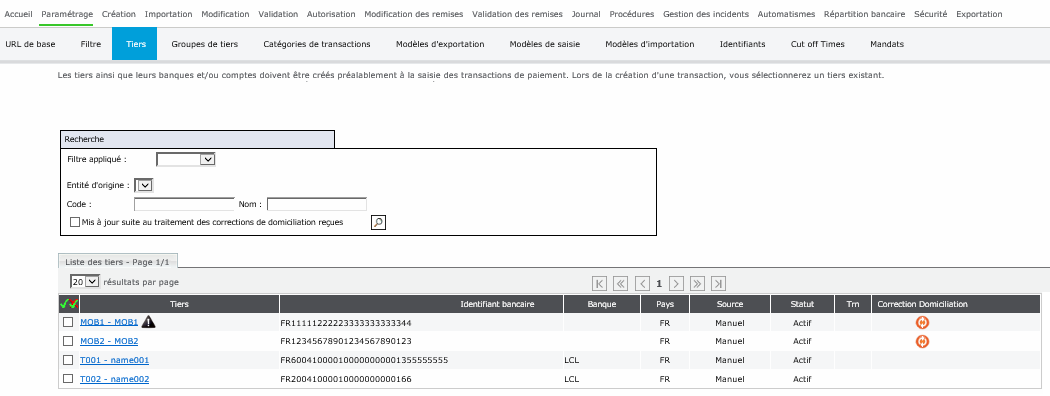
Personal data list:
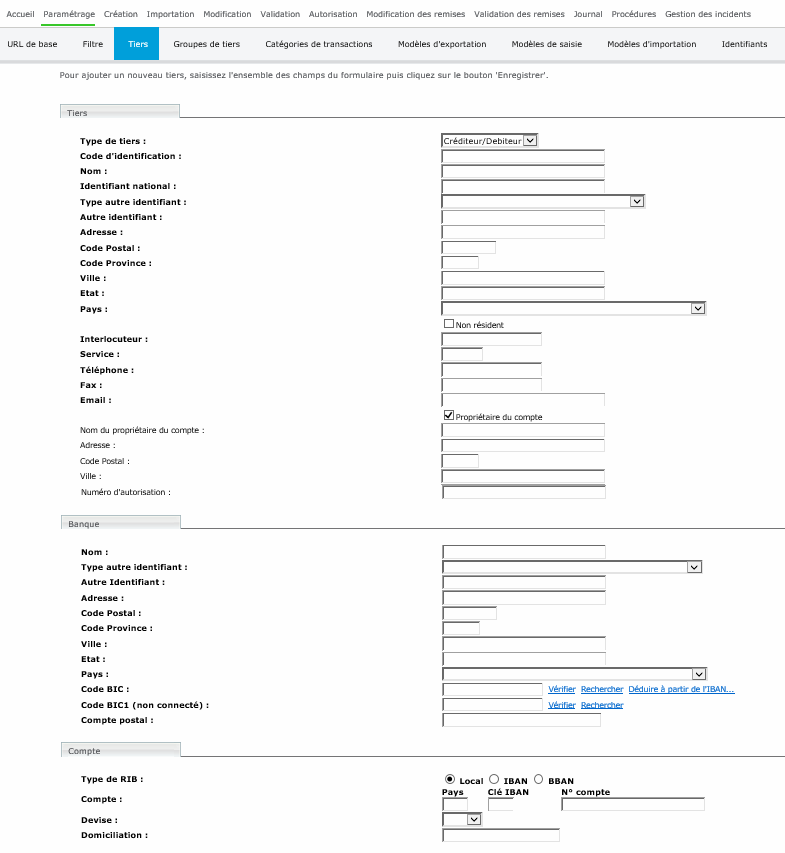
Purpose of data processing
The processing activities using Third Parties enable payments and receipts depending on the transfer type used and the third party category.
 Payment management
The various payment types managed in Sage XRT Business Exchange are based on the third party fields used for remittance generation.
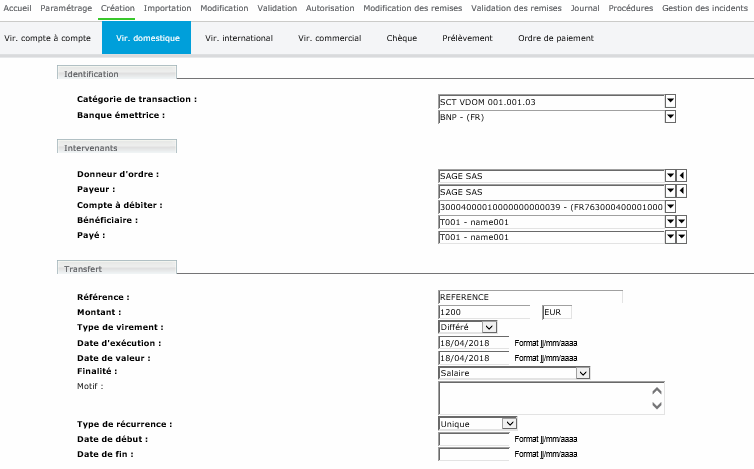
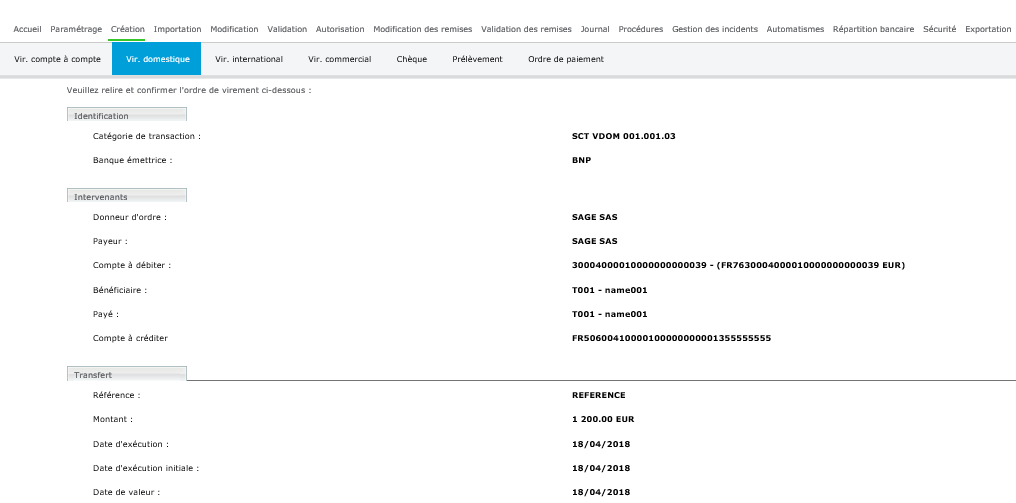
For example, in Domestic Transfers, third party details are included into the transactions if the corresponding third party is involved in them.
Manual entry of a domestic transfer:
Record confirmation of a domestic transfer:
Receipt management
The various types of receipts managed in Sage XRT Business Exchange are based on the third party fields used for remittance generation.
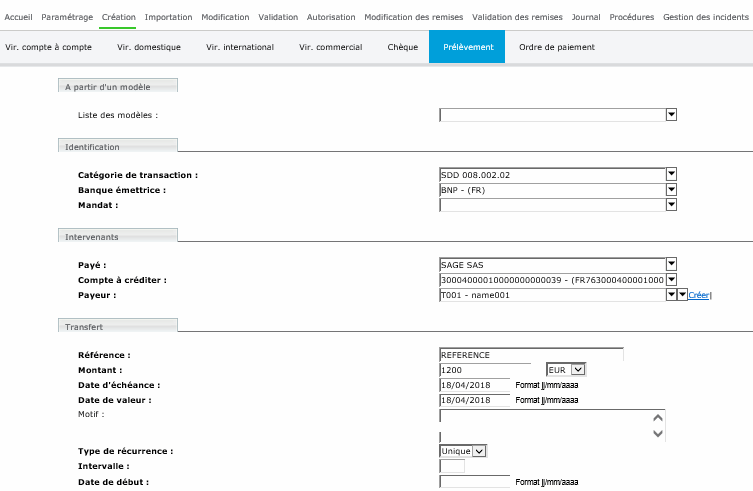
For example, in Domestic Direct Debits, third party details are included into the transactions if the corresponding third party is involved in them.
Manual entry of a direct debit:
Third party management
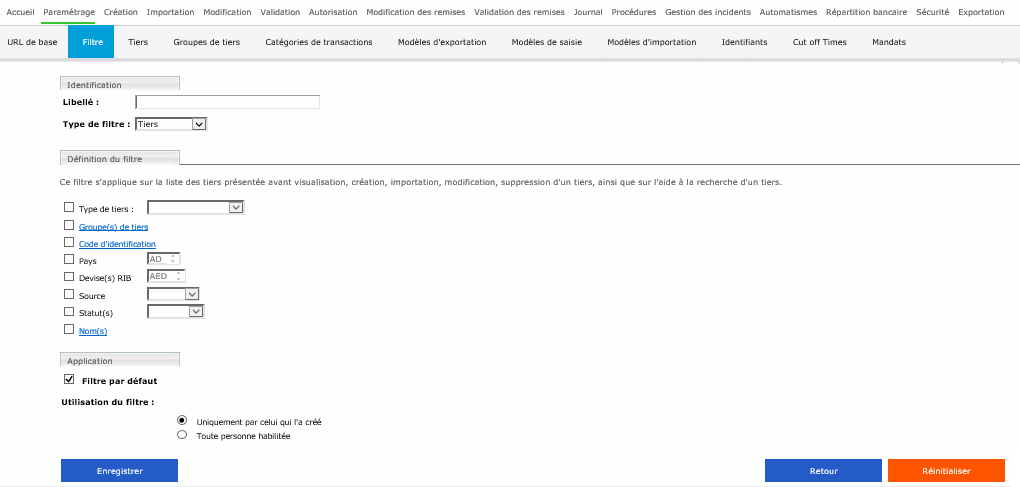
The standard third party filter is used to manage Third Parties. Filters can be private, one-off/repetitive, or default.
Creation of a third party filter:
Filtered third party list:
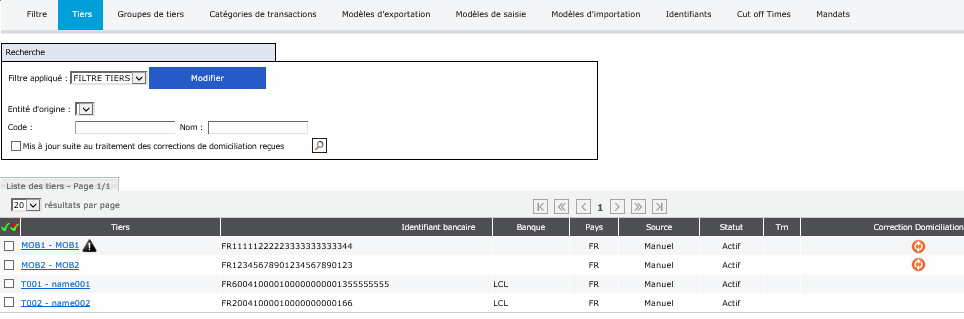
Third parties can modify their personal data via an authorized user. Modification in account number may be notified to the corresponding third party through the setup of alerts on third party data.
Right of erasure
Third parties can delete their personal data via an authorized user.
Third party deletion
Deleting third parties is possible only if:
- They are not associated with transactions.
- Their type is one-time and the transactions associated with them have been purged.
Authorized users have access to third party history.
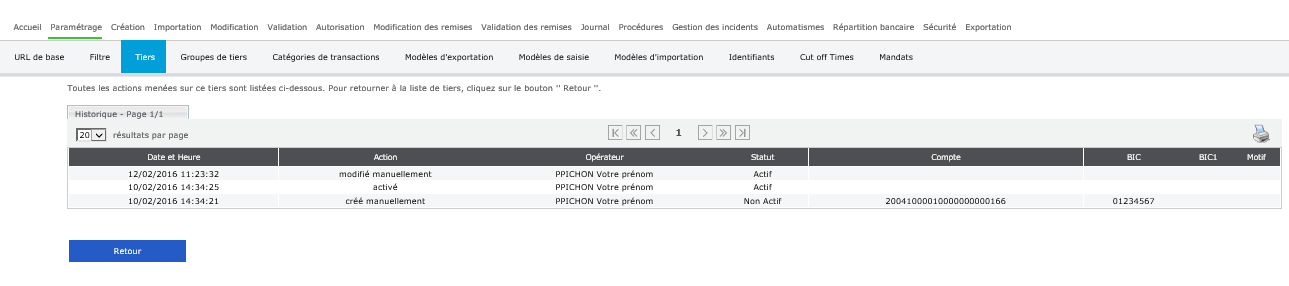
Amendment management
Third party creation comes before mandate creation. Mandates are associated with existing third parties.
They automatically retrieve the relevant data from Debtor tab of the mandate.
Creation of a direct debit mandate:
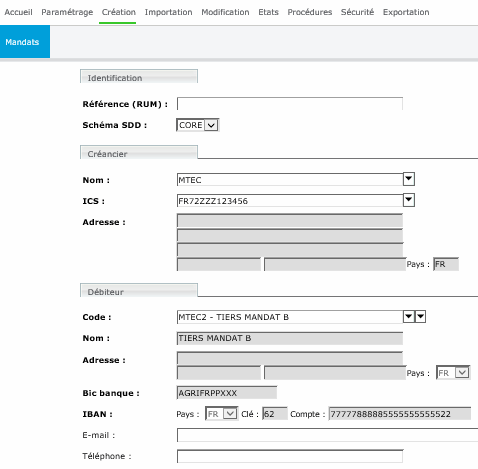
The modifications on third parties associated with mandates have an impact on the fields common to the third party (Debtor) and the associated mandate.
Export to Database
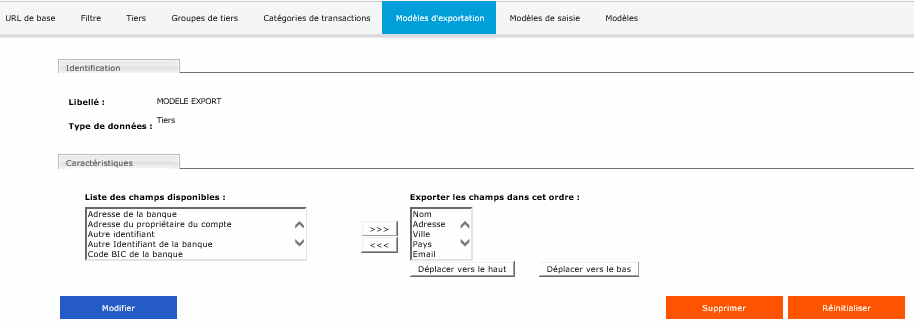
Third Party export uses a filter, a template (to specify the data to export) and a format.
Starting the export:
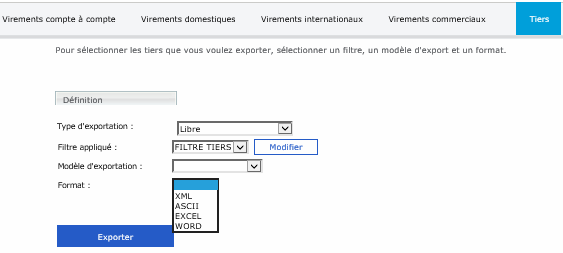
Setup of an export template: